


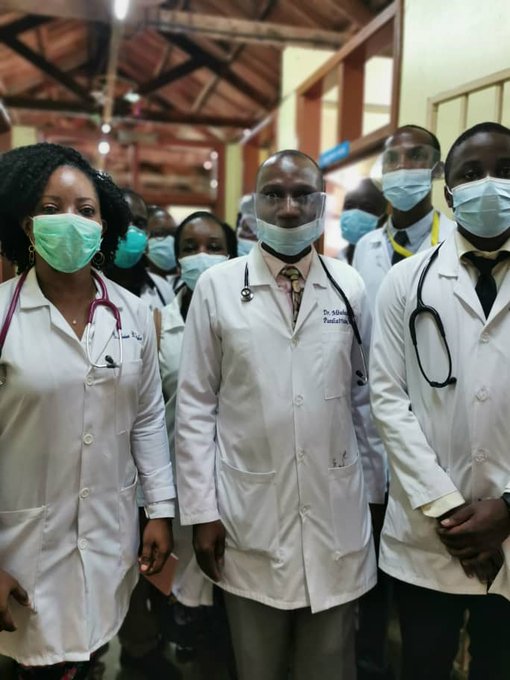
The Uganda Medical Association has rejected a government proposal to introduce a six-year undergraduate medical degree linked to internship. The body argues that extending the duration of training alone will not necessarily improve the quality of doctors graduating from universities. Medical professionals led by the association’s president, Dr Frank R. Asiimwe, said the proposal fails […]

The Uganda Medical Association has rejected a government proposal to introduce a six-year undergraduate medical degree linked to internship.
The body argues that extending the duration of training alone will not necessarily improve the quality of doctors graduating from universities.
Medical professionals led by the association’s president, Dr Frank R. Asiimwe, said the proposal fails to address the real challenges affecting the country’s health training system, particularly the shortage of internship placements for medical graduates.
The proposal seeks to extend the current medical training structure by integrating internship into the undergraduate programme, effectively making the internship a mandatory requirement for completing the medical degree.
However, Dr. Asiimwe said the association believes improving the quality of medical graduates is an important national goal but warned that simply increasing the length of training does not automatically produce more competent doctors.
He said there is no clear evidence that extending undergraduate training leads to better clinical competence.
“Improving the quality of medical graduates is a legitimate national goal and we agree with it. However, there is no clear evidence that simply increasing the duration of undergraduate training leads to better competence,” Dr. Asiimwe said.
The association is now calling for the immediate suspension of the planned reform until broader consultations are carried out with key stakeholders in the health sector.
Dr. Aimu also stressed that the academic integrity of university graduation must be protected, noting that students who complete their academic requirements should be allowed to graduate without unnecessary delays.
“We call for immediate suspension of plans to implement the proposed six-year undergraduate model linked to internship. We also call for protection of the academic integrity of university graduation so that students who complete their university requirements graduate without delay,” he said.
Medical professionals further faulted the consultation process behind the proposal, arguing that major policy reforms affecting the health sector should involve professional bodies and other stakeholders from the start.
According to Dr. Asiimwe, a bottom-up policy approach that involves doctors, universities, regulators and training institutions would produce more workable reforms.
He explained that the current proposal also raises practical challenges for supervisors responsible for training interns.
“If you give me a student who has not graduated and is not licensed, I cannot supervise them. I cannot take them as students. It already puts the whole internship programme in a very precarious situation,” he said.
Under the current system, a graduate who has completed the Bachelor of Medicine and Bachelor of Surgery (MBChB) receives a provisional licence from the Uganda Medical and Dental Practitioners Council and is then deployed to a recognised internship centre where they practice under supervision.
The association instead wants government to prioritise expanding accredited internship centres, strengthening clinical supervision and addressing the backlog of medical graduates who struggle to secure internship placements each year.
Health workers say tackling these structural challenges would significantly improve the training environment and the competence of new doctors entering Uganda’s health system.


